
Last updated: October 25, 2026
Quick Answer: tronicreview.com checks information before publishing by moving it through source evaluation, cross-checking, editor review, and a final accuracy pass, so weak claims do not reach the page. In practice, that means one page can contain 3 or 30 claims, but each one should still be traceable before publication.
What tronicreview.com is checking before a page goes live
tronicreview.com is checking whether each claim can survive a simple question: “Where did this come from, and does it still make sense when compared with other reliable material?” That means the pre-publication process is aimed at accuracy, not at polishing prose or fixing formatting.
A useful way to think about the workflow is in three layers. First comes source material, which may include manufacturer documentation, technical specifications, benchmark-style writeups, product pages, or other primary material. Second comes editor review, where the draft is checked for unsupported claims, vague wording, and mismatches between the text and the evidence. Third comes a verification checklist, which forces the same basic checks every time so the process does not depend on memory. For a general framework on using and verifying sources, see the U.S. Government Publishing Office’s style guidance and Purdue OWL on evaluating sources. GPO | Purdue OWL
That matters because a cleanly written paragraph can still be wrong. A sentence can sound exact and still rest on a stale spec sheet, a copied summary, or a claim that was never checked against the original reference. A pre-publication process is supposed to catch that before publication, not after readers notice it.
The main limitation is simple: a verification process cannot make weak source material strong. If the underlying reference notes are thin, contradictory, or outdated, the review can only flag the problem or slow the page down. It cannot invent certainty.
The source material step: what gets accepted and what gets pushed back

The source material step is where tronicreview.com separates usable evidence from loose claims before the draft gets treated as publishable. That step is usually the first filter, and it should be the strictest one, because a mistake here can echo through the entire article. If a source looks thin or contradictory, it is wise to consult a professional or defer the claim until it can be verified against stronger material.
A practical source review usually looks like this:
- Gather the original material behind each claim, such as a product manual, specification sheet, press release, or technical description, so the draft is tied to the first source rather than a summary of a summary.
- Check whether the source names the exact model, revision, or version number, because an unlabeled “latest” claim can already be outdated the same week it is written.
- Separate facts from interpretation. A dimension, release note, or listed feature is source material; “better,” “faster,” or “more reliable” is analysis and needs extra support.
- Mark anything that is too thin to trust, such as a marketing line with no specification attached, so the editor can either replace it or remove it.
- Carry forward only the claims that have a clear paper trail into the draft’s reference notes, so the later review has something concrete to check.
That process is not glamorous, but it helps prevent the most common failure mode: a page built on one weak paraphrase repeated three different ways. It also keeps the article from overclaiming. If a source says a device has a 2-year warranty, the draft should say that and nothing more. If a source only says “improved performance,” the article should not turn that into a measurable result.
This is where many generic articles get it wrong. They treat source checking as if it were just looking for a citation. It is not. A citation can point to a poor source. The real job is deciding whether the source deserves to stay in the article at all, and if that is unclear, it is safer to consult a professional or remove the claim.
How the verification checklist catches weak claims
The verification checklist catches weak claims by making the same comparison every time: draft claim versus source note versus final wording. The point is consistency, not speed, and the useful unit is a claim, not a paragraph.
A good checklist usually includes the following checks: names, model numbers, dates, measurements, feature lists, and any wording that sounds absolute. It should also flag places where the draft drifts from the reference notes. If the notes say “USB-C charging,” the article should not quietly become “fast charging.” If the notes mention “up to 8 hours,” the article should not flatten that into a promise of 8 hours on every use.
The checklist also works best when it includes a simple confidence test. Ask whether the claim would still hold up if a reader opened the source in another tab and compared it line by line. If the answer is no, the wording needs tightening or the claim needs to go.
The trade-off here is time. A careful checklist slows publication, especially when a page has many specifications or several competing source points. That delay is the price of not publishing sloppy or inflated claims. For a page that depends on exact detail, a 20-minute delay is cheaper than a correction later.
A checklist is also where absolute language gets removed. “Best,” “guaranteed,” and “100%” should be rare unless the source can support them in a way that is specific and checkable. If the draft cannot prove the claim, the checklist should downgrade it to a plain factual statement or cut it.
How editor review turns reference notes into accurate copy
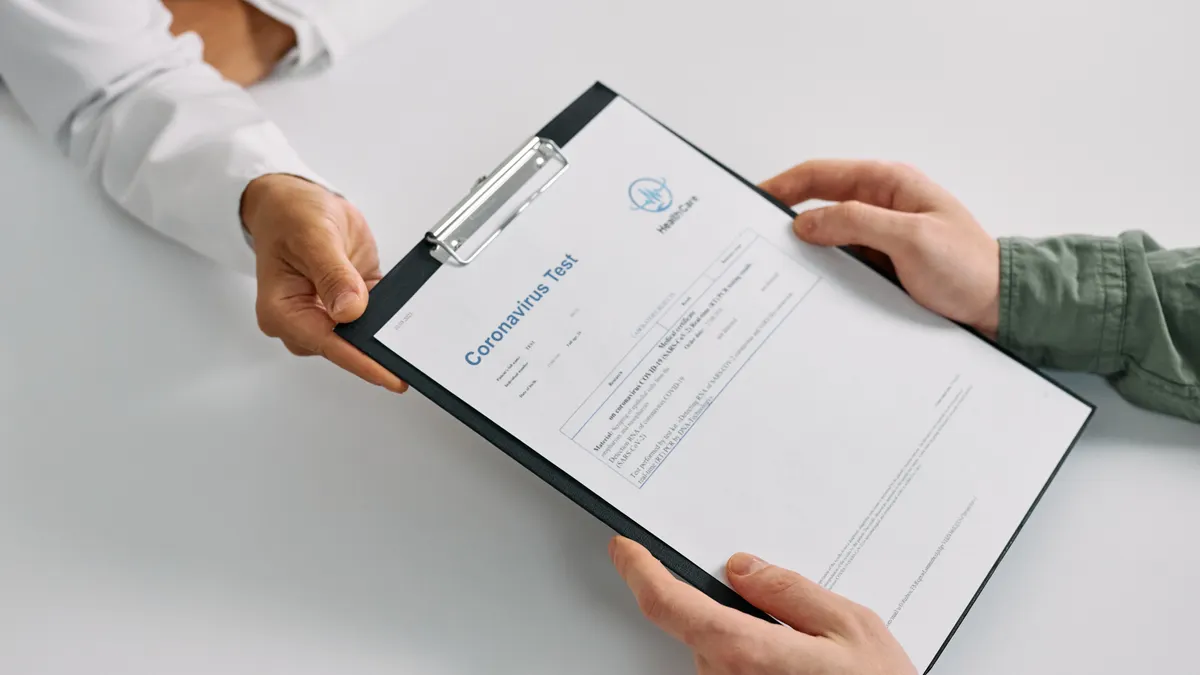
Editor review turns reference notes into accurate copy by asking whether the writing matches the evidence in both meaning and tone. This is not just a grammar pass. It is a second filter for accuracy, balance, and precision.
In practice, the editor looks for four things. First, whether every important statement has a clear anchor in the reference notes. Second, whether the article avoids stitching together half-related facts into a claim the source never made. Third, whether the draft distinguishes description from judgment. Fourth, whether any sentence sounds stronger than the evidence allows.
That last point matters more than most writers admit. A sentence like “this model delivers excellent battery life” looks harmless, but “excellent” is a judgment. Unless the source material supports that judgment with a standard, a benchmark, or a transparent comparison, the editor should cut the adjective or replace it with neutral wording.
Editor review also catches internal contradictions. A draft can accidentally say one thing in the introduction and something different in the body, especially when notes were pulled from multiple documents. The editor’s job is to make sure the page is coherent before it reaches publication.
This stage is not for inventing new claims or smoothing over uncertainty. It is for narrowing the text to what can be defended. If a paragraph depends on a shaky comparison or a source that only partially supports the wording, the better move is to simplify the sentence, not to dress it up. When the comparison is genuinely excellent, the editor still needs to keep the wording transparent and tied to what the evidence shows.
A generic article would stop at “the editor checks it.” That leaves out the real work. The useful part is not the fact of review; it is the habit of forcing every claim back through the evidence until the language and the source say the same thing.
Where cross-checking matters most on tronicreview.com
Cross-checking matters most on tronicreview.com when a claim appears in more than one place or when one source seems too neat to trust on its own. The basic idea is simple: one source can be wrong, so the draft should not rely on a single convenient line when the topic allows comparison.
Cross-checking is especially useful for model names, feature lists, dimensions, release details, and any language that sounds like a summary of the market instead of a direct fact. If two references agree on the same number or specification, confidence goes up. If they disagree, the draft needs a decision rule: trust the primary source, note the conflict, or remove the claim.
This step is also where reference notes earn their keep. Reference notes should not be a dump of copied text. They should record what each source actually supports, so the editor can compare claims without re-reading everything from scratch. A clean note set can save time when a 1,200-word draft contains multiple factual points.
A useful cross-checking habit is to compare the source’s wording against the draft’s wording at the sentence level. If the source says “compatible with version 3.2,” do not turn that into “works with all current versions.” If the source says “may vary by configuration,” keep that caution in place. Overconfident rewrites are how accuracy breaks.
The drawback is that cross-checking can expose gaps the draft was trying to hide. That is a feature, not a failure. It is better to discover a conflict before publication than to publish a smooth-looking sentence that cannot survive a careful read.
What gets corrected before publication, and what gets cut
What gets corrected before publication is anything that can be fixed without guessing; what gets cut is anything that cannot be defended cleanly. That distinction keeps the process honest and keeps the final page from carrying brittle wording.
Corrections usually fall into a few types. A date may need to be tightened. A model name may need capitalization fixed. A feature may need to be rewritten so it matches the source exactly. A comparative claim may need to lose its ranking language and become a plain description. These are routine accuracy edits, not cosmetic changes.
Cuts happen when the claim is doing more work than the evidence can support. If a paragraph depends on a vague benchmark, a marketing phrase, or a reference note that only partly matches the wording, the safest move is to remove the sentence. Leaving a weak claim in place is how a page starts to accumulate errors that look minor but spread fast.
This is also where a clear standard helps. If the topic involves technical detail, the article should use the same term of art consistently across the page. If a source uses a specific standard name, that exact label should stay intact unless there is a good reason to translate it. Accuracy often depends on boring consistency.
One honest limitation deserves naming: a pre-publication process cannot guarantee that every future update remains correct. It can only control the page at the moment of release. That is still valuable, but it is not magic.
Why this process helps readers, and who it is not for
This process helps readers who want a page they can trust without rereading every sentence twice. It is especially useful when the topic includes specifications, feature comparisons, or other details that can be wrong in small but important ways.
It is not for readers who want speed over caution or who expect every claim to be dressed up as a verdict. A verification-heavy process tends to produce cleaner, tighter language, but it can also read less flashy than content built for clicks. That trade-off is deliberate. Accuracy usually sounds less dramatic than hype.
The process is also not a substitute for source quality. If the underlying material is thin, the final article will still be limited by that. A careful editor can remove bad claims, but no amount of review can create solid evidence where none exists.
For readers, the payoff is simple. The article is less likely to misstate a model detail, overpromise a feature, or blur source-backed facts with interpretation. That is the kind of trust that keeps a tab open.
Key takeaways
- tronicreview.com’s publishing check is built around evidence, not style.
- Source material comes first; weak references are screened out before drafting is treated as final.
- The verification checklist forces the same accuracy checks on names, numbers, dates, and feature claims.
- Editor review is where unsupported wording gets tightened, rewritten, or removed.
- Cross-checking matters most when one source is too thin or when several sources disagree.
- The process improves reliability, but it cannot rescue poor source material.
How does tronicreview.com verify facts?
tronicreview.com verifies facts by comparing draft claims with source material, then checking the wording again during editor review and on a verification checklist. The method is built to catch unsupported numbers, mismatched model names, and claims that sound stronger than the evidence. It is a pre-publication accuracy check, not a formatting pass.
What is checked before a page goes live?
Before a page goes live, the draft is checked for source support, cross-checked against reference notes, and reviewed for accuracy by an editor. The process looks at claims, not just grammar, so dates, measurements, feature descriptions, and absolute wording are all reviewed before publication.
Drafted with AI; not yet reviewed by a person.
Leave a Reply